
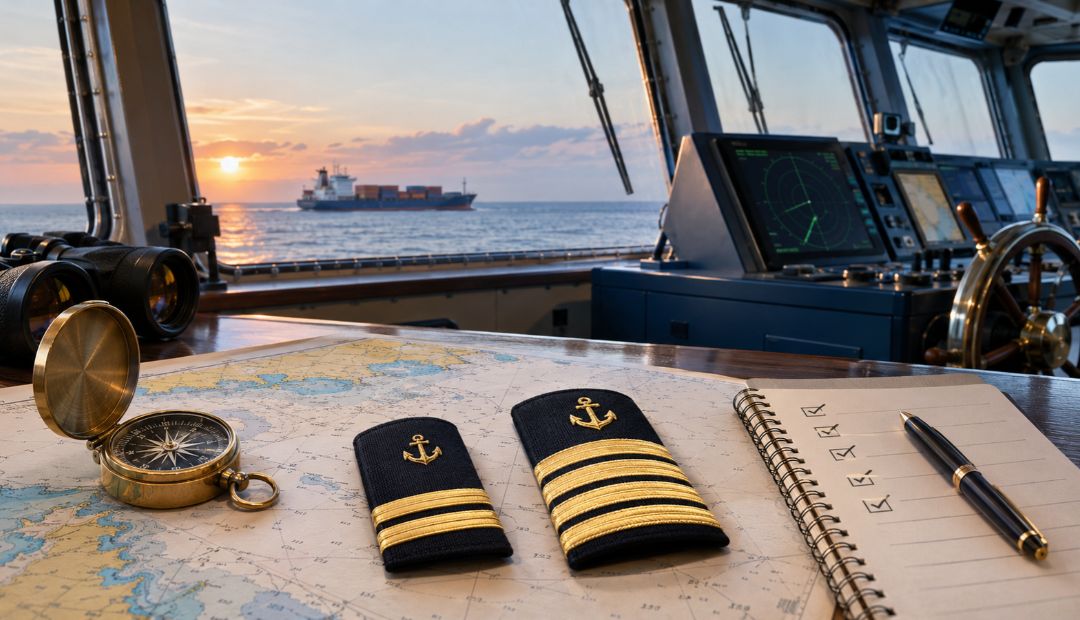
A successful maritime career requires more than technical competence and years of experience. As seafarers progress from cadets to senior officers and captains, their responsibilities increasingly involve managing people, making critical decisions, and demonstrating effective leadership.
An individual who performs exceptionally well in an operational role may not automatically be prepared for the responsibilities of commanding a vessel or leading a crew.
For maritime employers, this raises an important question: Are we assessing people only for how well they perform today, or also for the responsibilities they will assume tomorrow?
This is where behavioural readiness becomes an important consideration in maritime career progression.
How Behavioural Expectations Change from Cadet to Captain
Maritime careers involve progressively greater responsibility. Although technical knowledge and professional discipline remain essential throughout, the behavioural competencies required to perform effectively become more demanding.
- Cadets and early-career seafarers: Learning, discipline, teamwork, adaptability, and the ability to follow procedures are important foundations.
- Operational-level officers: Independent judgment, situational awareness, communication, and responsibility for assigned operations become increasingly important.
- Senior officers and captains: Leadership, crew management, decision-making under pressure, conflict resolution, and accountability for people and operations take on greater significance.
These competencies are not exclusive to particular ranks. Leadership and teamwork matter even at entry level, but their application becomes more complex as responsibilities increase.
Psychometrica's article, Do You Have What It Takes for a Maritime Career?, also highlights teamwork, work ethic, and leadership as important characteristics for maritime professionals.
Maritime Leadership Is More Than Technical Expertise
The importance of leadership in maritime operations is recognised internationally.
The International Maritime Organization (IMO), through its Standards of Training, Certification and Watchkeeping for Seafarers (STCW) Convention, establishes international requirements for maritime training and professional competence.
The 2010 Manila Amendments to the STCW Convention introduced additional training requirements relating to leadership and teamwork.
This recognition matters because maritime leadership extends beyond technical knowledge.
A technically competent officer must also be able to communicate effectively, consider different perspectives, coordinate crew members, and make responsible decisions in challenging situations.
Knowing how to perform a task and knowing how to lead others through that task are related, but different, competencies.
A Real Maritime Incident: Lessons from SS El Faro
The sinking of the American cargo vessel SS El Faro on October 1, 2015, during Hurricane Joaquin provides a documented example of why leadership and decision-making matter at sea.
The vessel sank near the Bahamas, resulting in the loss of all 33 people aboard.
The US National Transportation Safety Board (NTSB) investigation found that the captain failed to take sufficient action to avoid the hurricane, relied on outdated weather information, and did not adequately consider suggestions from other officers.
The investigation also identified ineffective bridge resource management, inadequate company oversight, safety management deficiencies, and several technical and operational factors contributing to the disaster.
The findings highlight an important leadership responsibility: the ability to listen, evaluate changing circumstances, and consider concerns raised by team members, even when the final decision rests with the person in command.
The incident does not establish that psychometric testing could have prevented the accident. However, it demonstrates why communication, judgment, and leadership behaviour deserve serious attention in maritime professional development.
Source: NTSB Investigation – Sinking of SS El Faro
What Should Maritime Employers Assess Before Promotion?
Promoting an officer should involve more than reviewing sea service, technical qualifications, and past performance.
While these remain essential, employers should also evaluate whether individuals demonstrate the behavioural competencies relevant to their next position.
Some important considerations include:
- Decision-making: Does the officer evaluate risks, consider available information, and exercise sound judgment?
- Communication: Can they communicate clearly, listen to colleagues, and encourage crew members to raise concerns?
- Leadership and teamwork: Can they guide colleagues, manage disagreements, and coordinate people effectively?
- Emotional regulation: How do they respond to pressure, unexpected developments, and challenging interpersonal situations?
- Accountability: Do they accept responsibility, respond constructively to feedback, and demonstrate a willingness to improve?
These competencies can be explored through onboard performance reviews, structured interviews, simulator-based exercises, supervisory feedback, and appropriately selected assessments.
No single method provides a complete picture. A combination of evidence is more useful when evaluating readiness for greater responsibility.
How Psychometric Assessments Can Support Maritime Career Progression
Psychometric assessments can offer additional insights into behavioural tendencies, personality characteristics, and potential development areas that may not be immediately apparent from technical performance alone.
Psychometrica's SeaPert-MHI Maritime Assessment is designed to assess personality, behavioural traits, leadership potential, and adaptability to stressful maritime environments.
According to Psychometrica's published information, SeaPert-MHI is intended to support maritime organisations with recruitment, promotion, and professional development, including assessments of cadets and officers.
For crewing companies and maritime HR teams, such assessments can provide an additional perspective when considering an officer's suitability for increased responsibility or identifying areas for further development.
However, psychometric results should not be treated as definitive predictions of leadership performance or used as the sole basis for promotion decisions. They should complement professional judgment, demonstrated competence, relevant training, and certification requirements.
Why Behavioural Readiness Matters for Maritime Employers Globally
For ship managers, crewing companies, and maritime HR professionals in the Philippines, Singapore, and India, the challenge is not simply preparing qualified seafarers for their next rank. It is also developing professionals who can manage increasingly complex responsibilities in international maritime operations.
With multinational crews working in demanding environments, communication, cultural awareness, professional relationships, and effective teamwork deserve particular attention.
Leadership development should also consider the psychological demands of working at sea. Long periods away from family, isolation, and demanding working conditions can affect seafarers' well-being.
These challenges are discussed further in Psychometrica's article on the Importance of Mental Health in Seafarers.
Organisations can support career progression through structured feedback, mentoring, leadership training, supervised experience, and relevant behavioural assessments.
Preparing Today's Officers for Tomorrow's Responsibilities
Maritime career progression should not be viewed simply as a reward for years of service or strong technical performance.
It should also involve understanding whether individuals are prepared for the responsibilities of their next role and what development may help them succeed.
By assessing behavioural competencies alongside technical qualifications and experience, maritime employers can make more informed promotion and development decisions.
The objective is not merely to promote the next captain. It is to develop maritime professionals who are technically competent, responsible, and prepared to lead.
Frequently Asked Questions
1. Why is behavioural readiness important in maritime career progression?
Behavioural readiness concerns an individual's ability to demonstrate competencies such as communication, teamwork, judgment, adaptability, and leadership. These become particularly important as seafarers assume greater responsibility for crew members and vessel operations.
2. Is technical competence sufficient for promotion to captain?
Technical competence, required certification, and professional experience are essential. However, senior maritime responsibilities also require leadership, crew management, decision-making, and effective communication.
3. How can maritime employers assess leadership readiness?
Employers can combine onboard performance evaluations, structured interviews, supervisory feedback, simulator-based exercises, and suitable psychometric assessments. Findings should be evaluated against the requirements of the intended role.
4. Can SeaPert-MHI support maritime promotion decisions?
Psychometrica identifies recruitment, promotion, and professional development among the applications of SeaPert-MHI. The assessment provides behavioural and personality-related insights that can complement other evidence used in career development and promotion decisions.
References
- International Maritime Organization (IMO). STCW Convention and the 2010 Manila Amendments. Official international maritime training and competency framework.
- National Transportation Safety Board (NTSB). Sinking of the Freight Vessel El Faro – Investigation DCA16MM001. Official accident investigation, including findings concerning the captain's decisions, bridge resource management, and organisational oversight.
- Psychometrica. SeaPert-MHI Maritime Assessment. Official product information describing assessment characteristics and applications in recruitment, promotion, and professional development.
- Psychometrica. Do You Have What It Takes for a Maritime Career?. Discussion of behavioural qualities associated with maritime careers.
- Psychometrica. Importance of Mental Health in Seafarers. Discussion of psychological demands and well-being considerations in maritime environments.