Mental health awareness sessions can help seafarers recognise stress, emotional difficulties and the importance of seeking support. However, awareness alone does not create a mentally supportive workplace.
For seafarers spending months away from home, navigating demanding working conditions and living alongside colleagues in a confined environment, mental well-being requires more consistent attention.
For ship managers, crewing agencies and maritime organisations, the priority should be to make mental well-being an ongoing part of organisational policy and everyday functioning—not simply an occasional training activity.
Why Maritime Mental Well-being Requires a Different Approach
Unlike conventional workplaces, ships bring professional and personal environments together. Seafarers may experience prolonged separation from family, limited opportunities for personal interaction outside their crew, fatigue, demanding schedules and difficulties accessing professional support.
Even onboard supervisors and senior officers, who are expected to support their teams, may struggle with similar pressures.
The International Maritime Organization (IMO) has highlighted the importance of addressing seafarer fatigue, working conditions, violence and harassment, alongside strengthening onboard and shoreside support mechanisms.
These challenges underline the need for maritime employers to move beyond individual stress management and consider the broader working environment.
What Should a Seafarer Mental Well-being Programme Include?
1. Regular Well-being Check-ins as an Organisational Practice
The starting point should be understanding employees.
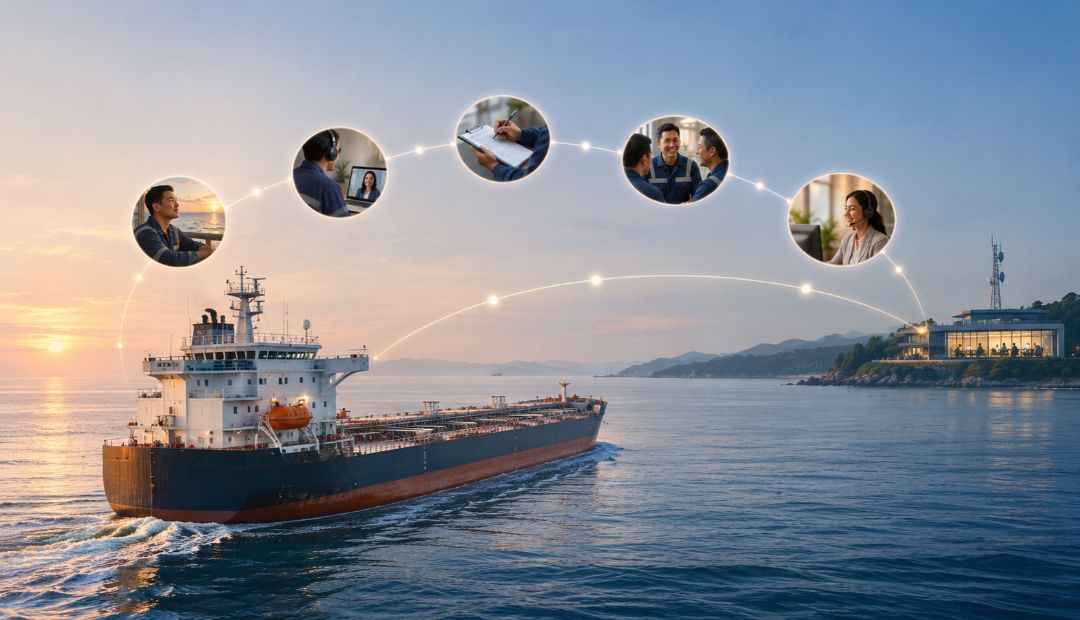
Maritime organisations should establish regular well-being check-ins as part of their people management policies. Shore-based HR or welfare teams can coordinate these interactions throughout deployment, ensuring that crew members have opportunities to communicate concerns.
Importantly, these check-ins should include captains, officers and onboard supervisors—not just the people reporting to them.
The objective is not simply to ask employees whether they are doing well. It is to build trust, understand their experiences and recognise challenges before they become more serious.
Regular engagement should also be supported by clear responsibilities, confidentiality safeguards and appropriate follow-up.
2. Assess Both Individuals and Their Working Environment
Understanding seafarer mental well-being requires looking at two interconnected areas.
Individual factors may include emotional resilience, stress responses, adaptability, coping abilities and personal support needs.
Organisational factors include leadership behaviour, team dynamics, workload, communication, workplace relationships and perceived organisational support.
Appropriate psychometric assessments, employee feedback and workplace surveys can provide complementary insights.
For example, if several crew members report stress associated with poor communication or difficult supervisory relationships, individual stress-management training alone may not address the underlying issue.
Specialised tools such as Psychometrica's SeaPert-MHI Maritime Assessment can contribute behavioural insights relevant to maritime roles and professional development. Such assessments should be used for their intended purposes, with professional interpretation, and not as substitutes for clinical mental health evaluation.
The purpose of assessment should be to understand people and their circumstances—not simply to classify them.
3. Provide Accessible and Confidential Professional Support
Every seafarer should know where and how to seek help when needed, regardless of whether an assessment has identified concerns.
A comprehensive programme should consider access to:
- Confidential professional counselling for personal and workplace concerns.
- Support for stress, emotional exhaustion and burnout.
- Appropriate psychological assistance following traumatic incidents.
- Referral pathways for concerns requiring specialised clinical care.
Support arrangements should account for connectivity limitations, time zones, language preferences and the realities of life onboard.
Existing initiatives demonstrate the importance of accessible assistance. ISWAN's SeafarerHelp provides free, confidential, multilingual support to seafarers and their families worldwide, around the clock.
Employers should ensure that employees understand available support options and can access them without unnecessary fear of stigma or career consequences.
4. Conduct Relevant Workshops and Development Programmes
Awareness and training remain important. However, they should form part of a wider support system rather than operate as standalone activities.
Depending on identified needs, maritime organisations can consider workshops addressing:
- Stress management and burnout prevention: Recognising pressure, emotional exhaustion and healthier coping practices.
- Emotional resilience: Developing practical skills for handling uncertainty, isolation and difficult situations.
- Communication and relationships: Improving interpersonal understanding, teamwork and conflict management.
- Respectful workplaces: Addressing bullying, harassment, inappropriate behaviour, cultural differences and inclusion.
- Trauma awareness: Helping employees recognise when someone may require professional assistance following a distressing event.
These interventions should reflect actual workforce challenges rather than follow an identical training calendar for every organisation.
5. Combine Universal Support With Needs-Based Interventions
An effective programme should have two levels of support.
Universal support: Regular check-ins, mental health awareness, clear reporting mechanisms and access to confidential assistance should be available to every seafarer.
Needs-based interventions: Additional counselling, targeted workshops, leadership development or workplace improvements can be introduced based on assessments, employee feedback and emerging concerns.
This approach allows employers to establish a consistent foundation while recognising that different individuals, vessels and teams may have different requirements.
6. Review Outcomes and Act on What Employees Share
A mental well-being programme should not end with collecting information.
Organisations need to review whether employees can access support, whether identified workplace concerns are being addressed and whether their interventions remain relevant.
Anonymous, aggregated feedback can help identify patterns without unnecessarily exposing individuals' private information.
Most importantly, employers must be prepared to act. When excessive workloads, poor communication or difficult team relationships contribute to distress, improvements to working conditions may be as important as counselling or resilience training.
Building a Globally Relevant Programme
For maritime organisations operating across the Philippines, Singapore, India and other international markets, consistency matters—but so does adaptability.
Crews may differ in language, culture, employment arrangements and access to shoreside resources. A common organisational policy can establish minimum standards while allowing support services and interventions to reflect local and individual needs.
The programme should be designed to support seafarers throughout their employment journey, from deployment preparation to onboard service and post-voyage follow-up.
From Awareness to Meaningful Organisational Support
A seafarer mental well-being programme does not need to begin with numerous workshops or complex interventions.
It can begin with a clear organisational commitment, regular communication, appropriate assessments and accessible professional support.
The key is to establish a system that continuously helps employers understand their people and respond to their needs.
Ultimately, a meaningful programme is not defined by how many mental health activities an organisation conducts, but by how consistently it supports the people working at sea.
Maritime employers exploring a structured approach can learn more about Psychometrica's Mental Well-being for Seafarers services and its modular Employee Wellness Programme.
Frequently Asked Questions
1. What is a Seafarer Mental Well-being Programme?
It is a structured organisational initiative designed to support seafarers' psychological and emotional well-being through ongoing engagement, appropriate assessments, professional assistance, workplace improvements and relevant training.
2. Are mental health awareness workshops sufficient for seafarers?
No. Awareness workshops provide valuable education, but they cannot replace regular engagement, confidential support or action to address workplace-related concerns. They are most useful when included within a broader programme.
3. How can assessments support maritime mental well-being programmes?
Appropriately selected assessments can help organisations understand relevant individual characteristics and workplace factors. Combined with employee feedback and professional judgement, these insights can inform targeted support and development initiatives. Psychometric assessments should not be treated as clinical diagnoses.
4. Who should be responsible for implementing the programme?
Senior management should establish organisational commitment and accountability. Shore-based HR or welfare teams can coordinate activities, while onboard personnel and qualified external professionals support implementation according to their responsibilities. Senior officers and supervisors should also be included as beneficiaries.
External References
- International Maritime Organization (IMO), July 2025: IMO Targets Seafarer Fatigue, Work and Rest Hours, and Harassment at Sea. Referenced in the discussion of organisational responsibilities and working conditions.
- International Seafarers' Welfare & Assistance Network (ISWAN): SeafarerHelp. Referenced as an established example of accessible, confidential seafarer support.