
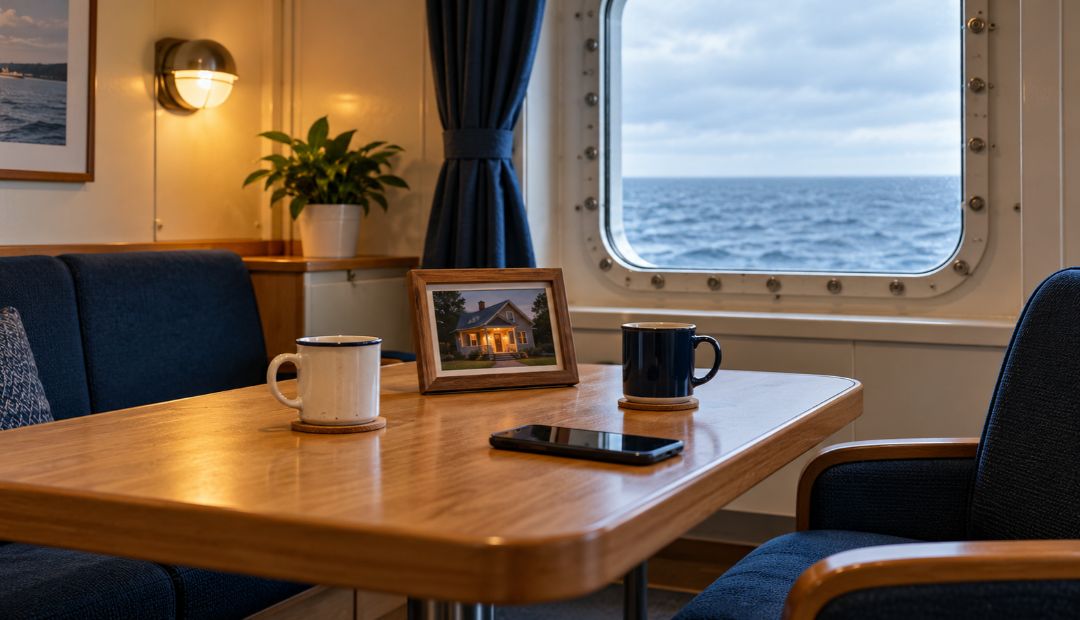
One seafarer had lost touch with his friends and could hardly communicate with his family. His experience is the starting point for this article.
It raises a practical question for maritime employers: how do people stay supported when the relationships they usually rely on become difficult to reach?
Seafarers deserve that support for their own wellbeing. Their working environment also makes connection relevant to how people communicate, cooperate and carry out their responsibilities.
When worries at home follow someone to work
Being far away when family needs help can leave a person feeling worried and emotionally unsupported. This is the sense of insecurity worth recognising: uncertainty about loved ones and limited opportunities for reassurance.
A ship is both a workplace and a living environment, with less separation between duties and personal life. IMO’s Guidelines on Fatigue recognise that family concerns beyond a seafarer’s control can interfere with sleep and contribute to fatigue. The guidance also explains how fatigue can impair attention, judgement and communication.
This provides a specific link between personal concerns and workplace functioning. Experiences will vary, but family contact deserves a place in discussions about working conditions.
Crew communication needs trust and a route to support
Communication between crew members includes asking questions, clarifying instructions and raising concerns. A useful test for leaders is whether people feel comfortable doing these things during an ordinary shift.
Where access to shore management is limited, crews also need clarity about whom to approach onboard and how unresolved concerns will reach someone with authority to act.
ISWAN’s Social Interaction Matters research examines how meaningful connection supports morale, resilience and inclusion, alongside the influence of fatigue, long hours, hierarchy and onboard culture. Its findings support making space for connection within the realities of shipboard life.
For employers, the practical questions are concrete: Is there time to clarify a handover? Can someone report being too tired for a task? Does a request for help receive a response?
People should also be able to seek support without having to disclose private family matters to the whole crew.
Four practical priorities for maritime employers
Ship managers, crewing companies and maritime HR teams can turn these questions into everyday practices:
- Make family contact workable. Provide usable connectivity, privacy and opportunities to speak across time zones while protecting rest. Agree how urgent family messages will reach crew members.
- Make clarification welcome. Allow time for handovers, check that instructions are understood, and respond respectfully when someone reports fatigue or raises a concern.
- Keep shore support reachable. Name a responsible contact and a fallback when that person or channel is unavailable. Tell crew members what action followed their request.
- Create opportunities for crew connection. Offer voluntary, culturally inclusive activities and informal conversation. Respect individual preferences and the need for rest.
These are practical applications of the communication and social-support priorities described in IMO and ISWAN guidance.
Put support within reach
Psychometrica’s mental-wellbeing support for seafarers includes counselling, workshops and training covering stress, emotional wellbeing, and healthy communication and relationships. These services can form part of a wider organisational response.
That response should also address workload, rest and access to help. A useful check is whether someone can actually use the support offered during their time onboard.
This belongs within a wider maritime people strategy, with ship managers, crewing teams and HR agreeing who will respond to concerns and follow them through.
A meaningful wellbeing approach should make it easier to stay connected to home, ask questions at work and reach someone who will respond. That is a practical standard maritime organisations can build into everyday operations.